The Day I Discovered My Profile Picture Was Fake: A True Story
The Day I Discovered My Profile Picture Was Fake: A True Story
I should have known something was wrong when people kept complimenting my profile picture. Not just "nice photo" comments, but specific praise about how professional and polished it looked. Coming from someone who usually takes selfies in poor lighting with yesterday's hair, this should have been a red flag.
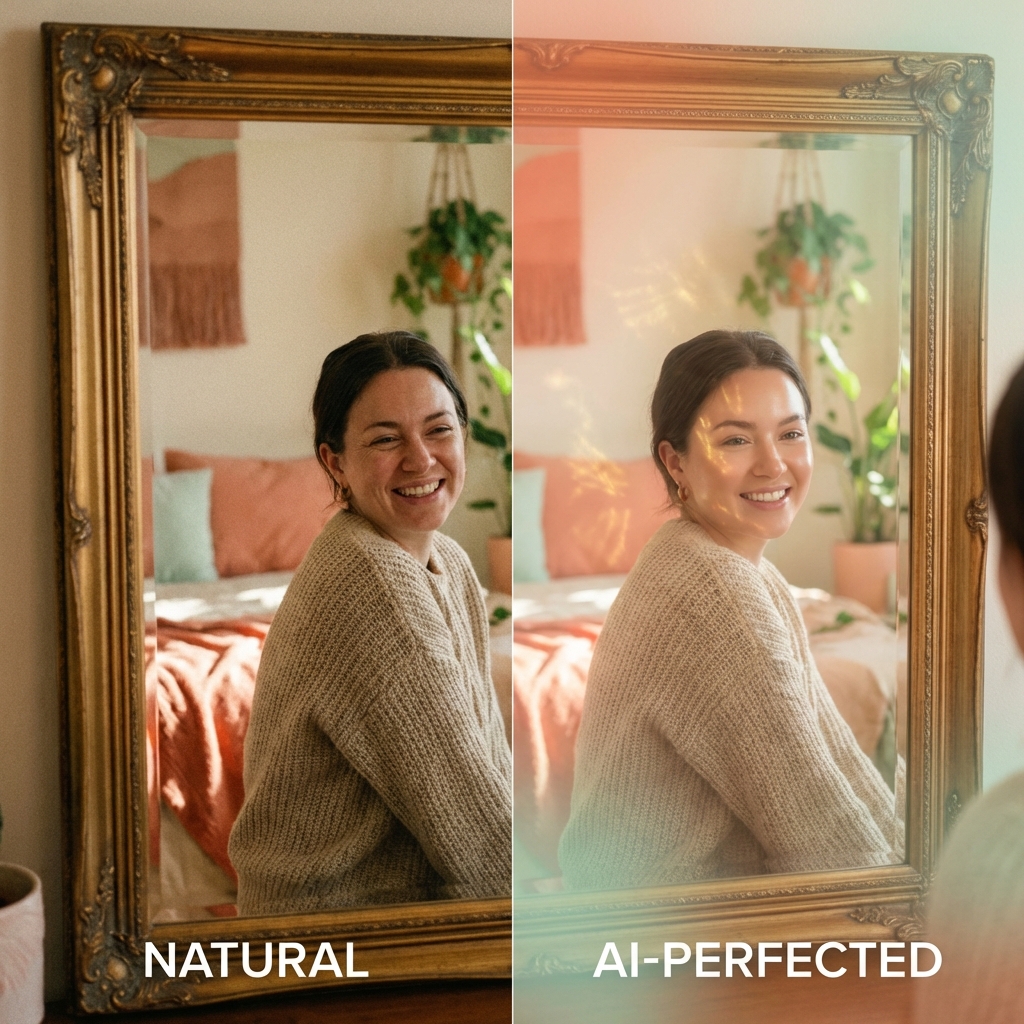
It took three months before I realized the truth: the photo I'd been using across all my social media wasn't actually me. Well, technically it was me—but AI had "improved" it so much that I was looking at a digitally perfected version of myself that didn't exist in real life.
How It Started
Like most people, I hate having my picture taken. The pressure to look good, the awkward posing, wondering which angle makes my face look less round—it's exhausting. So when a friend mentioned this new app that "enhances" photos using AI, I jumped at the chance.
The app promised to "bring out your best features" and make you look "professionally photographed." It sounded harmless. I uploaded a decent selfie from last summer and let the app work its magic.
The result was... stunning. My skin looked flawless but still natural. My eyes seemed brighter, more awake. The shadows under my eyes from chronic sleep deprivation? Gone. Even my hair looked like I'd just stepped out of a salon instead of rolling out of bed an hour earlier.
I thought I'd won the lottery. Finally, a profile picture I actually liked. I immediately updated it everywhere—LinkedIn, Facebook, Instagram, even my work Slack avatar.
The Cracks Begin to Show
Things got weird at a work conference about two months later. I'd flown across the country for an industry event, excited to network with people I'd only met online. But when I introduced myself to colleagues I'd been video chatting with for months, their expressions were... odd.
"Oh," one said, clearly trying to hide surprise. "You look different than your picture."
Another person didn't even recognize me initially. They walked right past me at the hotel bar where we'd planned to meet, even though I was the only person there matching my own description (black blazer, red scarf, holding a specific book).
At first, I chalked it up to the difference between photos and real life. We all know that disconnect. But the comments kept coming. "Your profile picture is so different." "Did you change your hair?" "Your eyes look different in person."
That's when I started to wonder: had the AI changed my appearance more than I thought?
The Reality Check
That night in my hotel room, I pulled up my original photo and the AI-enhanced version side by side. I'd looked at the enhanced version so many times that I'd memorized it, made it my mental image of myself. But I'd forgotten what the original looked like.
The difference was shocking.
The AI hadn't just removed blemishes or adjusted lighting. It had reshaped my face. My nose was narrower. My jawline was different. My eyes were larger and a slightly different color. Even my smile had been adjusted—my teeth were whiter and straighter than they actually are.
I looked at myself in the hotel mirror and then back at my "enhanced" profile picture. The person in that photo was beautiful. She looked like a better version of me. But she wasn't me.
The Uncomfortable Realization
Here's what nobody tells you about AI photo enhancement: it's not just fixing imperfections. It's creating a new standard of what you should look like. And once you see that perfected version of yourself, it's incredibly hard to go back to accepting your actual face.
I found myself checking the mirror constantly, noticing all the ways my real face didn't match my profile picture. My actual nose. My actual eye shape. The real color of my eyes in different lighting. Things I'd never thought about before suddenly seemed like flaws that needed fixing.
The app had promised to bring out my best features. Instead, it had created an impossible standard that I was now measuring myself against every single day.
The Decision
I had a choice to make. Keep using the AI-enhanced photo and continue experiencing that awkward disconnect when meeting people in person? Or change it back to something more authentic and risk having a "less attractive" online presence?
You know what made the decision for me? My niece.
She's thirteen and already obsessed with how she looks in photos. She takes dozens of shots to get one "perfect" selfie, then spends another half hour editing it. When I showed her my before-and-after photos, her exact words were: "Why would you use the before photo? You look so much better in the AI one."
That's when I realized: by using that enhanced photo, I was contributing to the problem. I was showing young people that their natural appearance isn't good enough. That we need AI to make us presentable. That authenticity is less valuable than digital perfection.
So I changed my profile picture. Not to the original selfie—I'm not a hero—but to a recent photo that actually looked like me. Yes, it shows my real nose. Yes, my skin has texture. Yes, my eyes are their actual color.
What I Learned
The weirdest part of this whole experience? After I changed my photo, several people messaged me asking if I was okay. They thought something must be wrong because I'd posted a "worse" picture. That's how normalized digital enhancement has become—using a real photo of yourself seems like a cry for help.
Here's what this taught me:
AI photo enhancement isn't neutral. These tools aren't just improving your photos—they're changing how you see yourself and how others see you. That's not always harmless.
The gap between online and offline gets bigger. Every time you heavily modify your photos, you're creating a bigger disconnect between your digital and physical presence. That leads to awkward moments and uncomfortable explanations.
You're teaching the next generation. Kids and teenagers are watching what we do. When we use heavily AI-modified photos, we're telling them that's normal and expected. Is that really the message we want to send?
Authenticity has value. Yes, my current profile picture isn't as "perfect" as the AI version. But it's actually me. When people meet me at conferences now, they recognize me. That counts for something.
The Broader Implications
My story is small in the grand scheme of things. Nobody was hurt, no serious deception took place. But multiply my experience by millions of people all doing the same thing, and you start to see a problem.
We're creating a world where everyone's online presence is an improved, AI-enhanced version of reality. Where meeting someone in person inevitably means they look "different" (read: worse) than their pictures. Where we're constantly comparing our real selves to digital fantasies.
I've been asked if I regret using that AI app. Honestly? I learned something important. I learned that I was more vulnerable to these technologies than I thought. I learned that the line between enhancement and deception is thinner than it seems. And I learned that sometimes the best filter is no filter at all.
Moving Forward
I still use some photo editing. I'll crop out that random person in the background, adjust the brightness if a photo is too dark, maybe remove a weird shadow. But I've drawn a line at tools that fundamentally change what I look like.
It's not always easy. I see friends post stunning photos and know they're using these apps. I see strangers who look impossibly perfect online. Sometimes I'm tempted to go back to that enhanced version.
But then I remember that conference, the surprise on people's faces, the subtle disappointment that I wasn't who they expected. I remember my niece learning that her real face isn't good enough.
And I keep my authentic, imperfect, real profile picture.
Because at the end of the day, I'd rather be recognized than admired.
Explore More Insights
Discover more technical articles on AI detection and digital forensics.
View All Articles